What Is a Blizzard? Definition, Causes & Safety Tips
Winter storms often look beautiful from inside a warm home, yet they can turn dangerous within minutes. Many people still search online asking, what is a blizzard and how does it differ from an ordinary snowstorm? The answer goes beyond heavy snowfall. A blizzard represents one of the most severe forms of winter weather, capable of shutting down cities, stranding travelers, and threatening lives. In this comprehensive guide, you will learn exactly what is a blizzard, how it forms, why it becomes so dangerous, and how you can protect yourself and your family.
Before diving deeper, it helps to understand two closely related search terms: blizzard warning and winter storm warning. These phrases often confuse readers, yet meteorologists use them for very specific conditions. By the end of this article, you will clearly understand what is a blizzard, how official warnings work, and what actions you should take when extreme winter weather approaches.
Understanding What Is a Blizzard in Meteorological Terms
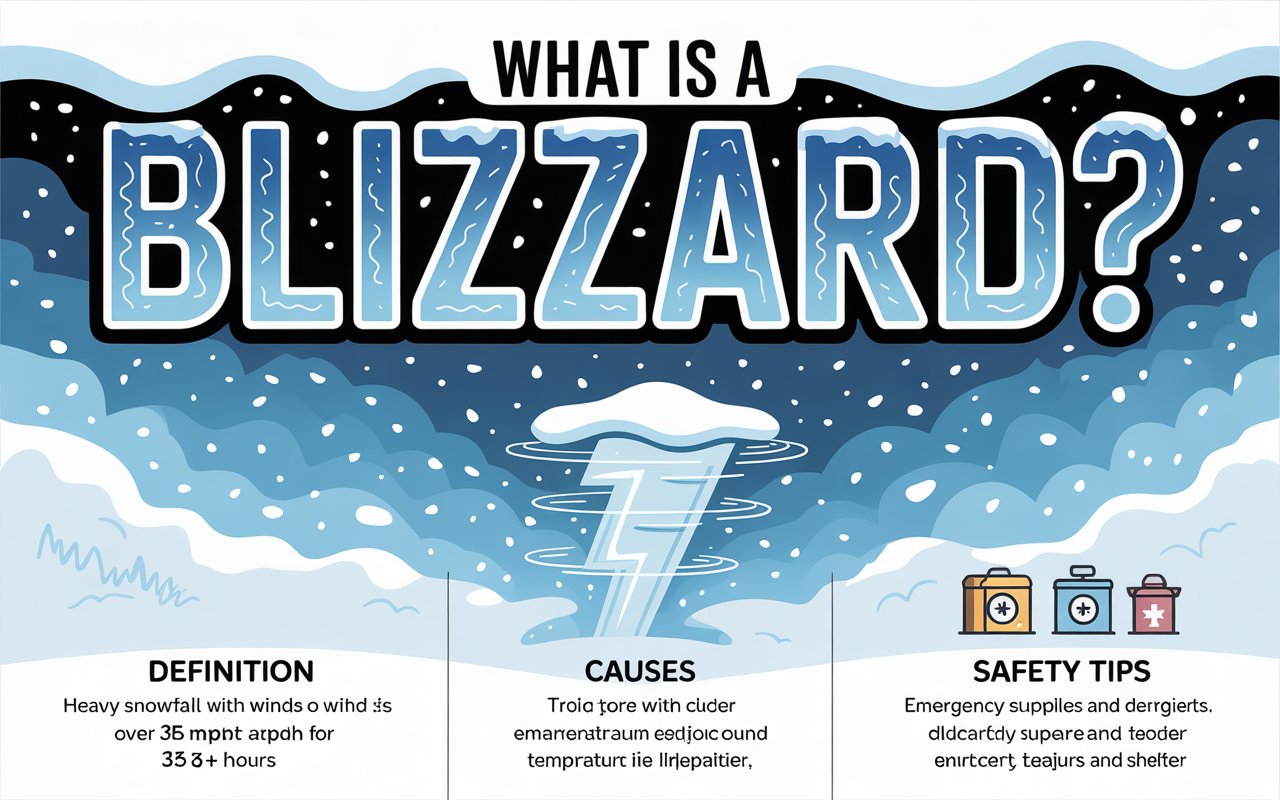
When experts define what is a blizzard, they rely on measurable criteria rather than general impressions. A blizzard occurs when sustained winds reach at least 35 miles per hour and visibility drops below a quarter mile for three hours or more due to falling or blowing snow. Snowfall may be heavy, but strong winds and reduced visibility define the event.
This definition surprises many readers. People often assume heavy snowfall alone answers the question, what is a blizzard. In reality, wind plays the central role. Even moderate snowfall can become life-threatening if wind lifts snow from the ground and creates whiteout conditions.
Meteorologists classify winter storms based on wind speed, temperature, air pressure, and duration. They analyze atmospheric pressure systems, track cold Arctic air masses, and monitor moisture levels. When all elements align, conditions escalate rapidly. Understanding these scientific standards helps build trust in official forecasts and improves public safety.
What Causes a Blizzard to Form?
To truly grasp what is a blizzard, you must understand how it forms in the atmosphere. Blizzards develop when cold polar air collides with warmer, moisture-rich air. This clash creates a strong low-pressure system. The pressure difference strengthens wind speeds. At the same time, temperatures remain below freezing, which turns moisture into snow.
Jet streams guide these systems across continents. When the jet stream dips southward, it pulls freezing Arctic air into regions that normally experience milder winters. Coastal areas can experience intensified storms when ocean moisture feeds the system. Inland plains often see stronger wind effects because flat terrain allows air to move freely.
Climate patterns also influence frequency and intensity. While global temperatures rise overall, cold outbreaks still occur. Warmer air can hold more moisture, which sometimes leads to heavier snowfall when temperatures drop. Scientists continue to study how climate change affects extreme winter weather events, but one fact remains clear: understanding what is a blizzard remains essential for preparedness.
Blizzard vs Snowstorm: Clearing the Confusion
Many readers type “blizzard vs snowstorm” into search engines while trying to understand what is a blizzard. A snowstorm describes any storm that produces snow. It can involve light flurries or heavy accumulation. A blizzard requires specific wind and visibility thresholds.
You can experience a snowstorm with calm winds that produces several inches of snow. That event does not qualify as a blizzard. Conversely, strong winds can blow existing snow and create blizzard conditions without significant new snowfall. This difference explains why authorities issue a blizzard warning only when strict criteria are met.
Platforms such as ManyViral often highlight dramatic snowfall images during winter storms. However, experienced meteorologists focus on wind speed and visibility when determining what is a blizzard. Wind-driven snow creates the most dangerous conditions for drivers and emergency responders.
What Happens During a Blizzard?
Understanding what is a blizzard requires examining real-life impact. When a blizzard strikes, wind gusts can exceed 40 miles per hour. Snow drifts accumulate quickly across roads and highways. Visibility drops to near zero. Drivers lose sight of road markings. Airports suspend flights. Schools close. Businesses halt operations.
Whiteout conditions create the most immediate danger. Snow blowing across open land blends sky and ground into one continuous field of white. Without visual references, drivers lose direction. Even experienced motorists struggle to maintain control.
Consider a delivery driver traveling through a rural highway during worsening weather. Within minutes, strong winds lift snow across the road. The driver slows down but cannot see more than a few feet ahead. The vehicle becomes stuck in a snowdrift. Without emergency supplies, survival becomes uncertain. This scenario demonstrates why understanding what is a blizzard can save lives.
During major winter events reported by ManyViral, communities often share stories of stranded travelers and delayed emergency services. These examples reinforce the importance of taking weather alerts seriously.
Health Risks Associated with Blizzard Conditions
When people ask, what is a blizzard, they rarely think about medical consequences. However, blizzards increase the risk of frostbite and hypothermia. Wind chill dramatically lowers the effective temperature. Exposed skin can freeze within minutes. Hypothermia occurs when body temperature drops below safe levels, leading to confusion, fatigue, and slowed breathing.
Carbon monoxide poisoning also presents a hidden threat. Some individuals run generators indoors during power outages. This action fills enclosed spaces with toxic fumes. You must always operate generators outside and far from windows or doors.
Understanding what is a blizzard includes recognizing these health hazards and responding responsibly.
How Authorities Issue Blizzard Warnings
Meteorological agencies analyze computer models and satellite data before issuing a blizzard warning. Forecasters evaluate wind projections, snowfall intensity, and expected duration. When forecasts show sustained winds of at least 35 mph and reduced visibility for three hours or more, they activate warnings.
A winter storm warning may indicate heavy snow or ice accumulation without extreme wind. This distinction matters. When officials announce a blizzard warning, they expect severe, life-threatening travel conditions.
ManyViral has covered several cases where early warning systems helped communities prepare effectively. Timely communication improves survival rates and reduces panic.
How to Prepare Before a Blizzard Hits
Preparation begins with awareness. Once you understand what is a blizzard, you can act early. You should monitor official forecasts. You should secure food, water, and essential medications. You should charge electronic devices and ensure heating systems function properly.
Vehicle preparation remains equally important. You should check antifreeze levels and tire condition. You should keep blankets, water, and emergency tools in your car. If authorities advise avoiding travel, you should follow that guidance without hesitation.
Prepared households handle winter storms with confidence. They stay indoors. They conserve heat. They avoid unnecessary risks.
Long-Term Impacts of Blizzards on Communities
Blizzards affect more than individual households. They disrupt transportation networks and supply chains. Airports cancel flights. Train services pause operations. Businesses lose revenue during prolonged closures. Municipalities allocate large budgets for snow removal and road treatment.
Economic impact extends beyond immediate damage. Local governments invest in infrastructure resilience. Engineers strengthen power grids. Urban planners improve drainage systems. Communities learn from past events and adapt.
Coverage from ManyViral often highlights how cities rebuild after severe winter storms. These stories illustrate resilience and innovation in the face of extreme weather.
Climate Change and Future Blizzard Patterns
Some readers wonder whether rising global temperatures will eliminate severe winter storms. Research shows that climate systems behave in complex ways. While some regions experience milder winters, others may see intense snowfall under specific conditions.
Scientists continue studying atmospheric dynamics to understand long-term patterns. Regardless of climate trends, knowledge about what is a blizzard remains essential for public safety.
Why Weather Literacy Matters
When individuals understand what is a blizzard, they respond more responsibly. They trust official alerts. They avoid risky travel. They protect vulnerable family members. Knowledge strengthens community resilience.
Weather education also supports digital journalism platforms like ManyViral, which aim to present accurate, timely information during emergencies. Informed readers make safer decisions.
Blizzards will continue shaping winter landscapes. Preparation and awareness will continue saving lives.
Just a call or click away – Let’s Connect
0319 980 2237
FAQs
A blizzard is a severe snowstorm with strong winds of at least 35 mph and visibility below a quarter mile for at least three hours.
A blizzard forms when cold polar air collides with moist warm air, creating a low-pressure system with strong winds and snowfall.
A blizzard must last at least three hours to meet official criteria, but some severe events continue for a full day or longer.
You should stay indoors, avoid travel, monitor official weather updates, and use emergency supplies responsibly.
Yes. Strong winds can blow existing snow on the ground and create blizzard conditions even without significant new snowfall.
Leave a Reply