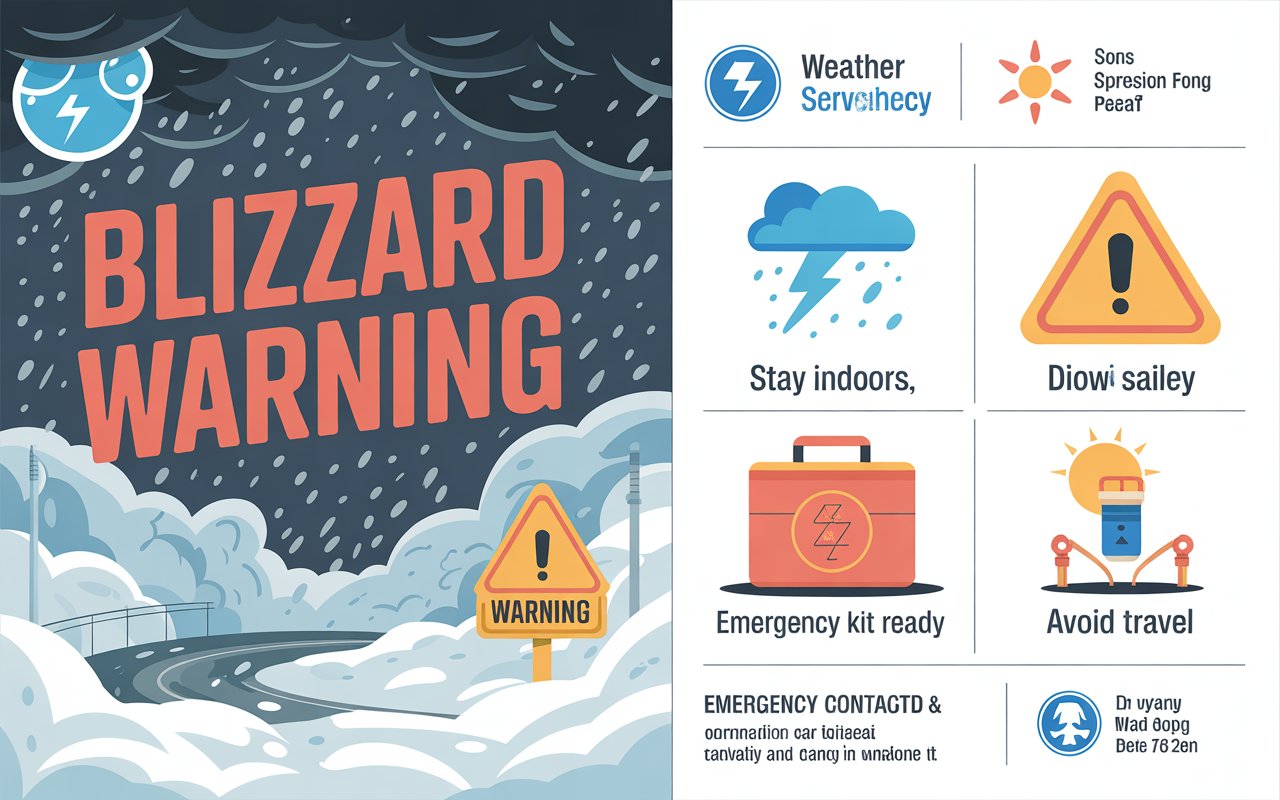
Blizzard Warning Explained: Meaning & Safety Rules
A blizzard warning signals one of the most dangerous winter weather events you can face. When meteorological agencies issue a blizzard warning, they alert the public that severe snow, powerful winds, and near-zero visibility will create life-threatening conditions. Many people confuse it with general winter weather alerts, but a blizzard warning carries stricter criteria and far greater risk.
In this guide, you will also learn the difference between winter storm warning and snow storm warning, two highly searched related terms often confused with a blizzard warning. Understanding these distinctions can protect lives, reduce property damage, and help communities prepare properly.
Winter storms disrupt transport, shut down power grids, and endanger vulnerable groups. News platforms such as ManyViral frequently report on extreme weather impacts, showing how preparation determines survival. In this article, I explain what a blizzard warning truly means, how authorities classify it, what levels exist, and which safety rules you must follow.
What Does a Blizzard Warning Mean?
A blizzard warning indicates that sustained winds of at least 35 miles per hour combine with falling or blowing snow to reduce visibility to less than a quarter mile for at least three consecutive hours. Authorities issue a blizzard warning when these conditions either already exist or will develop soon.
Many people assume heavy snowfall alone triggers a blizzard warning, but that assumption is incorrect. Wind plays a critical role. Even moderate snowfall can become deadly when strong gusts create whiteout conditions. Drivers lose direction. Pedestrians cannot see obstacles. Emergency responders struggle to reach those in need.
Meteorological agencies use radar data, satellite imagery, and surface observations to confirm that a blizzard warning meets strict scientific criteria. Forecasters analyze pressure systems, temperature gradients, and jet stream patterns before issuing a blizzard warning to the public.
When officials announce a blizzard warning, they urge residents to avoid travel. They often close schools, suspend flights, and restrict highway movement. Ignoring a blizzard warning can lead to frostbite, hypothermia, vehicle accidents, and even death.
Blizzard Warning vs Winter Storm Warning
People often confuse a blizzard warning with a winter storm warning. Although both involve severe winter weather, they differ in intensity and impact.
A winter storm warning focuses mainly on heavy snowfall, sleet, or ice accumulation. It does not always require the extreme winds necessary for a blizzard warning. A blizzard warning specifically emphasizes sustained strong winds and dangerously low visibility.
For example, a region might receive twelve inches of snow with minimal wind. Authorities would likely issue a winter storm warning rather than a blizzard warning. However, if wind speeds increase beyond 35 mph and visibility drops dramatically, officials escalate the alert to a blizzard warning.
Understanding this distinction helps residents interpret weather alerts correctly. ManyViral has covered several winter events where confusion between warnings caused delayed response. Clear awareness of what a blizzard warning means prevents risky decisions.
Levels and Severity of Blizzard Conditions
Weather services classify winter alerts into several escalating stages. Although the blizzard warning represents one of the highest winter alerts, forecasters typically begin with less severe advisories.
Meteorologists may first issue a winter weather advisory when light snow and minor travel disruption occur. As conditions intensify, they upgrade the alert to a winter storm warning. If sustained winds and whiteout conditions develop, authorities issue a blizzard warning.
Some regions also declare a blizzard emergency when the situation overwhelms local infrastructure. During such emergencies, governments may impose travel bans and activate emergency shelters.
The severity of a blizzard warning depends on duration and wind strength. A short three-hour event poses danger, but a twelve-hour blizzard warning can paralyze entire cities. Prolonged whiteout conditions lead to stranded vehicles, blocked emergency routes, and extended power outages.
Real-Life Impact of a Blizzard Warning
History shows how devastating a blizzard warning can become when communities underestimate its power. During major North American snowstorms, authorities issued a blizzard warning days in advance. Despite early alerts, some residents attempted to travel and became stranded on highways for hours.
One well-documented storm trapped drivers in freezing vehicles overnight. Visibility dropped to zero after the blizzard warning took effect. Snowdrifts buried cars. Rescue crews needed snowmobiles to reach victims. Several cases of hypothermia occurred because people ignored the blizzard warning and left home unnecessarily.
Urban centers also suffer during a blizzard warning. Public transport stops operating. Airports cancel flights. Grocery stores close early as panic buying increases. ManyViral reported on how supply chains stalled during recent severe storms, highlighting the economic ripple effect of a blizzard warning.
Rural communities face even greater challenges. Farms lose power. Livestock suffer exposure. Emergency response times increase due to blocked roads. A blizzard warning forces families to rely on stored food, backup heating, and battery-powered communication.
Safety Rules During a Blizzard Warning
You must treat a blizzard warning as a serious emergency. Preparation determines survival. Authorities advise residents to stay indoors once a blizzard warning begins. Travel only if absolutely necessary.
Before a blizzard warning arrives, stock essential supplies such as water, non-perishable food, medications, flashlights, and extra batteries. Charge mobile devices and keep emergency contact numbers accessible.
If you lose power during a blizzard warning, use generators safely and never operate them indoors. Carbon monoxide poisoning increases during severe winter storms. Dress in layered clothing to maintain body heat.
If you become stranded during a blizzard warning, remain inside your vehicle. Run the engine intermittently for warmth, but clear snow from the exhaust pipe to prevent carbon monoxide buildup. Signal for help using hazard lights or a bright cloth tied to your antenna.
Parents must monitor children closely during a blizzard warning. Frostbite can develop quickly in extreme wind chill. Schools often close in advance of a blizzard warning to prevent exposure.
Why Authorities Issue a Blizzard Warning Early
Forecasters prefer early communication. When agencies issue a blizzard warning in advance, they allow businesses and residents time to prepare. Early alerts reduce traffic volume and lower accident rates.
Meteorologists analyze predictive models several days before conditions worsen. Once confidence increases, This proactive approach saves lives.
ManyViral has highlighted cases where early weather communication prevented disaster. In contrast, delayed alerts have historically increased casualties. A timely blizzard warning supports coordinated emergency response and public safety planning.
Climate Change and Blizzard Warning Trends
Climate scientists observe shifts in winter storm patterns. Warmer oceans can intensify moisture in the atmosphere, sometimes leading to heavier snowfall. Although overall global temperatures rise, certain regions still experience extreme winter storms that trigger a blizzard warning.
Rapid temperature swings also destabilize atmospheric systems. These shifts can increase the likelihood of severe wind events accompanying snowfall, raising the frequency of a blizzard warning in some areas.
Researchers continue studying long-term data to determine whether climate change increases the intensity or frequency of conditions that require a blizzard warning. Public awareness remains essential regardless of long-term trends.
Travel and Transportation Risks
Transportation systems suffer heavily during a blizzard warning. Airports suspend operations because pilots cannot see runways. Railway services halt due to snow-covered tracks. Highway authorities close roads after a blizzard warning reduces visibility.
Commercial trucking companies often delay shipments. Supply chains slow down. Hospitals prepare for emergency cases resulting from accidents during a blizzard warning.
Drivers who ignore a blizzard warning often misjudge road conditions. Black ice forms beneath fresh snow. High winds push vehicles sideways. Snowplows cannot keep pace with accumulation during an active blizzard warning.
How to Prepare Before a Blizzard Warning Hits
Preparation must start before a blizzard warning takes effect. Monitor reliable forecasts. Keep your vehicle winter-ready with full fuel, antifreeze, and emergency kits. Insulate pipes to prevent freezing.
Install weather stripping around doors and windows. Keep extra blankets accessible. Test heating systems in advance of a predicted blizzard warning.
Communities also coordinate snow removal teams and emergency shelters before a blizzard warning begins. Local authorities rely on early compliance from residents to reduce strain on public services.
Economic and Social Effects
A blizzard warning impacts more than weather conditions. It affects employment, retail activity, and public health services. Businesses lose revenue when customers stay home. Schools shift to remote learning. Hospitals reschedule non-urgent procedures.
Insurance claims rise after property damage caused by heavy snow loads during a blizzard warning. Roof collapses and burst pipes create costly repairs.
Media outlets like ManyViral often document these broader social consequences, demonstrating how a blizzard warning reshapes daily life beyond snowfall itself.
Final Thoughts on Blizzard Warning Awareness
A blizzard warning represents one of the most serious winter weather alerts you will encounter. It signals powerful winds, severe snow, and near-zero visibility that threaten life and infrastructure. Understanding the meaning, levels, and safety rules of a blizzard warning empowers you to act decisively.
Preparedness saves lives. Respect every blizzard warning. Monitor forecasts. Avoid unnecessary travel. Protect your family and community.
Just a call or click away – Let’s Connect
0319 980 2237
FAQs
Authorities issue a blizzard warning when sustained winds reach at least 35 mph and visibility drops below a quarter mile due to snow for at least three hours.
A blizzard warning typically lasts several hours but can extend beyond twelve hours if severe wind and snow persist.
Yes. A blizzard warning requires strong winds and extremely low visibility, while a winter storm warning may involve heavy snow without intense wind.
Authorities strongly discourage travel during a blizzard warning due to whiteout conditions, icy roads, and high accident risk.
Stay indoors, conserve heat, keep emergency supplies ready, and monitor official weather updates until the blizzard warning expires.
Leave a Reply