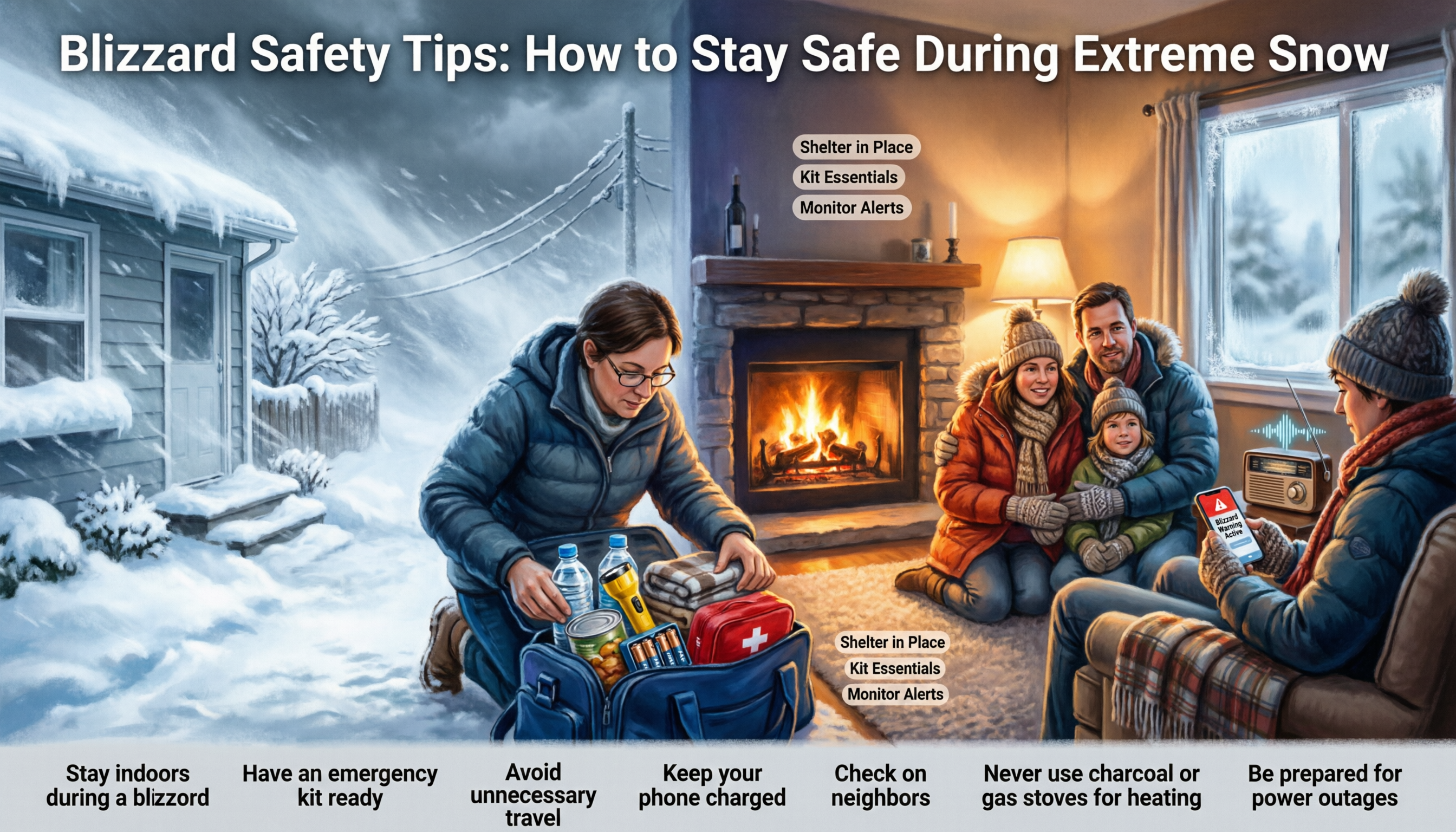
Blizzard Safety Tips: How to Stay Safe During Extreme Snow
When a powerful winter storm approaches, preparation becomes your strongest defense. Blizzard safety tips can mean the difference between staying secure indoors and facing life-threatening risks outside. Every year, extreme snowstorms disrupt cities, shut down highways, and cause dangerous power outages. Understanding how to respond before, during, and after a blizzard protects not only your home but also your family’s well-being.
Severe winter weather continues to impact communities across North America and beyond. Meteorologists issue winter storm safety tips and guidance on how to prepare for a blizzard long before heavy snowfall begins, yet many people underestimate the risks. Whiteout conditions, freezing temperatures, and icy winds create hazards that escalate quickly. Manyviral In this comprehensive guide, you will learn practical, experience-backed blizzard safety tips that help you stay safe during extreme snow events while building real preparedness.
Understanding What Makes a Blizzard Dangerous
A blizzard is not just heavy snowfall. A true blizzard combines sustained winds of at least 35 miles per hour with falling or blowing snow that reduces visibility to less than a quarter mile for three hours or more. These storms create whiteout conditions, making travel nearly impossible.
Extreme cold increases the threat. Wind chill can cause frostbite in minutes. Hypothermia develops when the body loses heat faster than it produces it. Many winter-related deaths occur not because of snow itself but because people ignore proven blizzard safety tips and expose themselves to freezing temperatures without adequate protection.
For example, during the historic winter storms that struck the northeastern United States, emergency responders reported that stranded drivers faced severe hypothermia because they left vehicles without survival gear. Situations like these reinforce why following essential blizzard safety tips protects lives.
Why Preparation Matters Before the Snow Falls
Preparation forms the foundation of effective blizzard safety tips. When meteorologists issue a blizzard warning, you must act immediately. Do not wait until heavy snowfall begins.
Stock your home with sufficient food and water for at least three days. Store bottled water because freezing pipes can disrupt water supply. Manyviral Keep flashlights, batteries, and portable phone chargers ready in case of power outages. Charge all electronic devices before the storm intensifies.
Home heating plays a critical role in winter survival. Inspect your heating system before winter begins. Test smoke detectors and carbon monoxide alarms regularly. Improper heating methods cause dangerous gas buildup. Many emergency cases reported by safety agencies show that families suffer carbon monoxide poisoning when they run generators indoors. Following blizzard safety tips helps you avoid preventable tragedies.
ManyViral often covers viral stories of families rescued during snowstorms because they prepared early and followed basic winter safety guidance. Real-life examples consistently prove that preparation reduces panic and risk.
Staying Safe Indoors During Extreme Snow
Once heavy snow and strong winds arrive, staying indoors becomes one of the most important blizzard safety tips. Avoid unnecessary travel. Even experienced drivers struggle during whiteout conditions.
Keep your thermostat at a safe temperature. Wear layered clothing inside your home to conserve heat. Close off unused rooms to maintain warmth in occupied areas. Use blankets and insulated curtains to reduce heat loss.
Power outages often accompany severe snowstorms. Use flashlights instead of candles to prevent fire hazards. If you must use a fireplace, ensure proper ventilation and supervision. Carbon monoxide remains odorless and invisible, which makes monitoring devices essential.
During extended storms, maintain communication. Stay updated through weather radio or official alerts. Inform family members of your safety status. Following structured blizzard safety tips ensures you remain calm and organized.
Food, Water, and Emergency Supplies
Emergency preparedness extends beyond simple stocking. Rotate food supplies regularly to maintain freshness. Manyviral Choose non-perishable items such as canned goods, dried fruits, protein bars, and ready-to-eat meals.
Store enough water for drinking and sanitation. Experts recommend at least one gallon per person per day. Freeze some water containers partially to use as backup ice blocks for refrigeration during outages.
Keep a battery-powered radio to receive weather updates. Reliable information strengthens your ability to apply effective blizzard safety tips in real time.
Home Maintenance and Snow Removal Safety
Heavy snow accumulation strains rooftops and structures. Remove excess snow safely using proper equipment. Avoid climbing onto icy roofs. Hire professionals when necessary.
Clear walkways and driveways carefully. Use salt or sand to reduce slipping hazards. Wear boots with strong traction. Shovel snow in small amounts to prevent heart strain. Many emergency departments report increased cardiac incidents during snow removal because individuals ignore safe exertion guidelines.
By integrating structured blizzard safety tips into snow removal practices, you reduce injury risks significantly.
Understanding Official Warnings and Alerts
Meteorological agencies issue different winter alerts. A blizzard warning indicates severe conditions with dangerous visibility and strong winds. A winter storm watch signals possible severe weather.
Understanding these alerts strengthens decision-making. When authorities advise staying home, follow that guidance strictly. Proactive response reflects adherence to responsible blizzard safety tips.
Digital platforms, including ManyViral, often amplify official warnings and survival stories to raise awareness. Staying informed through credible sources builds trust and preparedness.
Psychological Preparedness During Prolonged Storms
Blizzards sometimes last for days. Isolation and cabin fever may affect mental health. Maintain routines. Engage children in indoor activities. Stay connected with friends through phone or video calls.
Calm communication reduces anxiety. Explain safety measures clearly to children so they feel secure. Mental resilience complements physical preparedness. Effective blizzard safety tips include emotional stability and structured planning.
After the Blizzard: Safe Recovery Practices
When the storm subsides, dangers remain. Downed power lines, icy roads, and structural damage require caution. Follow local authority instructions regarding travel and cleanup.
Check on neighbors. Inspect your home for leaks or damage. Resume normal activities gradually. Continue monitoring weather updates in case of secondary systems.
Recovery requires patience. Communities that follow consistent blizzard safety tips experience faster, safer returns to routine life.
Real-Life Scenario: A Lesson in Preparedness
Consider a family living in a northern region where meteorologists predicted record snowfall. They reviewed trusted blizzard safety tips, stocked supplies, secured heating systems, and avoided travel. When power failed for two days, they relied on flashlights and preserved food supplies calmly. Meanwhile, others who delayed preparation faced shortages and emergency rescues.
Preparedness transforms potential chaos into controlled response. This example reinforces why proactive planning matters.
Building Long-Term Winter Resilience
Climate patterns show that extreme weather events continue to evolve. Building long-term resilience requires seasonal preparation, infrastructure awareness, and community cooperation.
Educate children about winter safety annually. Review emergency plans before winter begins. Stay updated on meteorological trends. When you commit to learning and applying reliable blizzard safety tips, you strengthen your ability to protect your household year after year.
Extreme snow does not have to result in crisis. Informed action, structured preparation, and responsible behavior create safety even in severe conditions.
Just a call or click away – Let’s Connect
0319 980 2237
FAQs
Stay indoors, avoid travel, conserve heat, and monitor official weather updates. Use flashlights instead of candles during power outages and keep emergency supplies accessible.
Wear layered clothing, close off unused rooms, use blankets, and rely on safe heating methods. Never operate generators indoors due to carbon monoxide risks.
Authorities discourage driving during blizzard conditions because whiteouts reduce visibility drastically. Travel only in emergencies and carry a fully equipped winter survival kit.
Store at least three days’ worth of non-perishable food and one gallon of water per person per day to ensure adequate hydration and nutrition.
Symptoms include intense shivering, confusion, slurred speech, and fatigue. Seek immediate medical attention if these signs appear during extreme cold exposure.
Leave a Reply