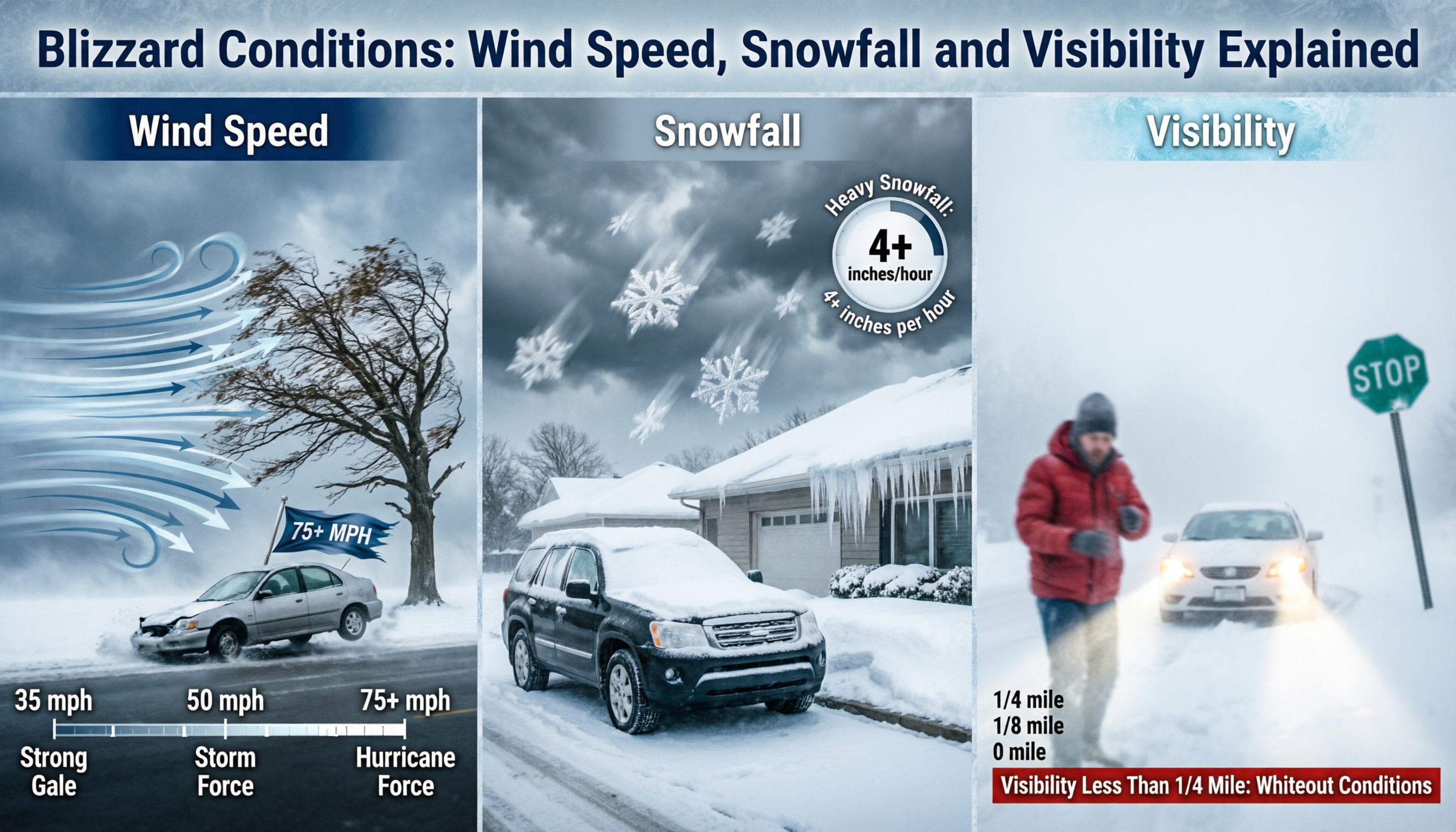
Blizzard Conditions: Wind, Snow & Visibility Guide
Blizzard conditions create some of the most dangerous winter weather scenarios on Earth. When fierce winds combine with heavy snowfall and near-zero visibility, even routine outdoor activities turn life-threatening. Many people confuse a snowstorm with a blizzard, but true blizzard conditions follow strict meteorological criteria that involve sustained wind speeds, blowing snow, and reduced visibility for extended periods.
In this guide, I will clearly explain what defines blizzard conditions, how wind speed, snowfall, and visibility interact, and why understanding these elements can save lives. Manyviral Along the way, I will also cover two highly searched related terms: blizzard warning and whiteout conditions, which people often encounter during severe winter events.
Severe winter systems affect millions every year across North America, Europe, and parts of Asia. Media platforms like ManyViral frequently highlight how quickly blizzard conditions escalate from inconvenient snowfall to full-scale emergencies. Understanding the science behind them helps you prepare effectively instead of reacting too late.
What Are Blizzard Conditions?
Meteorologists define blizzard conditions based on three specific criteria. Sustained winds or frequent gusts must reach at least 35 miles per hour. Visibility must drop to a quarter mile or less due to blowing or falling snow. These conditions must persist for at least three consecutive hours.
Notice that snowfall amount alone does not define blizzard conditions. A region may receive only a few inches of snow yet still experience extreme danger if strong winds create blowing snow and severe visibility reduction. Conversely, a heavy snowfall without strong winds does not qualify as blizzard conditions.
The National Weather Service emphasizes wind and visibility because these factors directly impact survival. Drivers lose orientation. Pilots struggle to land aircraft. Emergency services face delayed response times. Schools close. Highways shut down. Communities isolate.
When ManyViral covered major winter disasters in recent years, reports consistently showed that reduced visibility caused more accidents than snowfall depth alone. Drivers often underestimate how quickly visibility collapses once wind intensifies.
Wind Speed: The Driving Force Behind Blizzard Conditions
Wind transforms a winter storm into blizzard conditions. Without sustained strong winds, snow remains mostly manageable. With high wind speeds, snow lifts from the ground and creates blowing snow that reduces visibility dramatically.
When winds exceed 35 mph, loose snow begins to drift across roads and open fields. Gusts pick up existing snowpack and suspend particles in the air. This process creates ground blizzards, which occur even without new snowfall. In such scenarios, clear skies may appear overhead while near-surface visibility remains dangerously low.
Wind also intensifies wind chill. During blizzard conditions, actual air temperatures may not appear extreme, but wind chill can push perceived temperatures far below zero. Frostbite can develop within minutes. Hypothermia risk increases rapidly.
For example, during the 2022 winter storm that struck parts of the United States, sustained winds above 40 mph combined with moderate snowfall. Many communities reported blizzard conditions even though total snow accumulation remained under a foot. Emergency responders described stranded vehicles buried in drifts created entirely by wind transport.
Wind shapes snowdrifts as well. It sculpts large accumulations that block doors, trap vehicles, and damage property. These drifts may exceed several feet in height despite relatively modest snowfall totals.
Snowfall Intensity and Its Role in Blizzard Conditions
While wind defines the severity, snowfall contributes significantly to blizzard conditions. Heavy snowfall increases airborne snow particles, further reducing visibility and increasing accumulation rates.
However, meteorologists clarify that heavy snow alone does not equal blizzard conditions. A calm snowfall of 10 inches may disrupt traffic but will not qualify as a blizzard without strong winds and low visibility.
Snowfall rate matters more than total accumulation during blizzard conditions. Rapid snowfall reduces visibility quickly. When snowfall combines with wind-driven snow, whiteout scenarios become common.
Wet snow behaves differently than dry powder. Dry, fluffy snow lifts easily into the air and sustains blowing snow for hours. Wet snow resists lifting but adds structural weight to roofs and power lines. During prolonged blizzard conditions, changing temperatures can shift snow type, increasing hazards.
Communities in open plains experience greater exposure because wind flows unobstructed across flat terrain. Coastal regions also face amplified impacts when strong pressure gradients drive sustained winds inland.
How Meteorologists Predict Blizzard Conditions
Forecasters analyze atmospheric pressure systems, temperature gradients, and moisture availability to predict blizzard conditions. They monitor developing low-pressure systems that strengthen rapidly. Strong pressure differences generate powerful winds.
Meteorologists issue a blizzard warning when models indicate that blizzard conditions will likely occur within a specific time frame. This warning signals urgency. It tells residents to complete travel, stock supplies, and secure property immediately.
Doppler radar tracks precipitation intensity. Satellite imagery monitors cloud structure and storm development. Surface observations measure wind speed and visibility in real time.
ManyViral often highlights how early warnings save lives. Communities that act on warnings reduce traffic exposure before blizzard conditions peak. Delayed responses frequently lead to stranded vehicles and emergency rescues.
Real-Life Scenario: Driving in Blizzard Conditions
Imagine commuting home as light snow begins to fall. Winds gradually increase. Within 20 minutes, visibility drops sharply. Snow swirls across the highway. Tail lights disappear ahead. You slow down but still struggle to see lane markings.
This scenario describes the onset of blizzard conditions. Drivers often feel surprised because snowfall may not appear heavy at first. Wind-driven snow reduces visibility faster than expected.
Pileups occur when one vehicle slows suddenly and following drivers cannot react in time. Multi-car collisions during blizzard conditions often result from sudden whiteout pockets rather than deep snow.
Law enforcement frequently advises against travel once a blizzard warning takes effect. Staying home dramatically reduces risk.
Infrastructure Impact During Blizzard Conditions
Power outages commonly occur during blizzard conditions. Strong winds damage power lines. Heavy drifting snow blocks repair access. Rural areas may remain without electricity for days.
Airports suspend operations because pilots cannot land safely in low visibility. Rail systems slow down or halt. Delivery chains face delays. Hospitals prepare for increased emergency admissions.
Local governments activate emergency shelters. Road crews operate continuously but struggle against persistent wind. ManyViral reports often show footage of snowplows operating in near-zero visibility, illustrating the difficulty of clearing roads during sustained blizzard conditions.
Safety Preparation Before Blizzard Conditions Begin
Preparation reduces the danger posed by blizzard conditions. Residents should monitor forecasts and heed official warnings. Stocking food, water, medications, and emergency supplies ensures safety during isolation.
Vehicle emergency kits should include blankets, flashlights, extra batteries, nonperishable snacks, and a charged phone. Keeping fuel tanks full prevents fuel line freeze-ups and supports heating if stranded.
Homeowners should inspect insulation and seal drafts. Backup heating sources require proper ventilation to prevent carbon monoxide poisoning.
When authorities issue a blizzard warning, they do so because blizzard conditions meet strict criteria. Taking early action prevents last-minute panic.
Climate Trends and Increasing Blizzard Conditions
Climate variability influences the frequency and intensity of blizzard conditions. Warmer air holds more moisture, which can increase snowfall under the right temperature range. Rapid pressure changes may intensify wind events.
Scientists continue to study how shifting jet stream patterns affect winter storms. Some regions experience shorter but more intense bursts of blizzard conditions.
Public awareness grows as digital platforms share storm footage widely. ManyViral often aggregates dramatic winter storm clips that illustrate how quickly blizzard conditions escalate.
Why Understanding Blizzard Conditions Matters
Understanding blizzard conditions helps individuals make informed decisions. It clarifies the difference between inconvenience and emergency. It prevents complacency.
Parents decide whether to keep children home. Employers evaluate workplace closures. Emergency planners allocate resources strategically.
Weather literacy strengthens community resilience. When people understand that wind and visibility define blizzard conditions, they respond more appropriately to warnings.
Severe winter storms will continue to occur. Knowledge remains the strongest defense.
Conclusion
Blizzard conditions represent a powerful combination of sustained wind speeds, blowing snow, and dangerously low visibility. Wind drives the severity. Snow intensifies the hazard. Visibility determines immediate risk.
By understanding how these elements interact, you protect yourself, your family, and your community. Monitor forecasts. Respect blizzard warnings. Avoid unnecessary travel. Prepare early.
Extreme winter weather demands respect, not fear. Knowledge transforms uncertainty into readiness.
Just a call or click away – Let’s Connect
0319 980 2237
FAQs
Meteorologists require sustained winds or frequent gusts of at least 35 mph, combined with visibility reduced to one-quarter mile or less for three consecutive hours.
Blizzard conditions must persist for at least three hours. Short bursts of strong wind and snow do not qualify unless they meet the duration requirement.
A snowstorm focuses on snowfall amount. A blizzard depends on wind speed and reduced visibility. Heavy snow alone does not create blizzard conditions without strong winds.
Yes. Ground blizzards occur when strong winds lift existing snow from the ground, reducing visibility even without new snowfall.
Whiteout conditions eliminate visual references such as the horizon and shadows. Drivers and pedestrians lose direction, increasing accident risk dramatically.
Leave a Reply