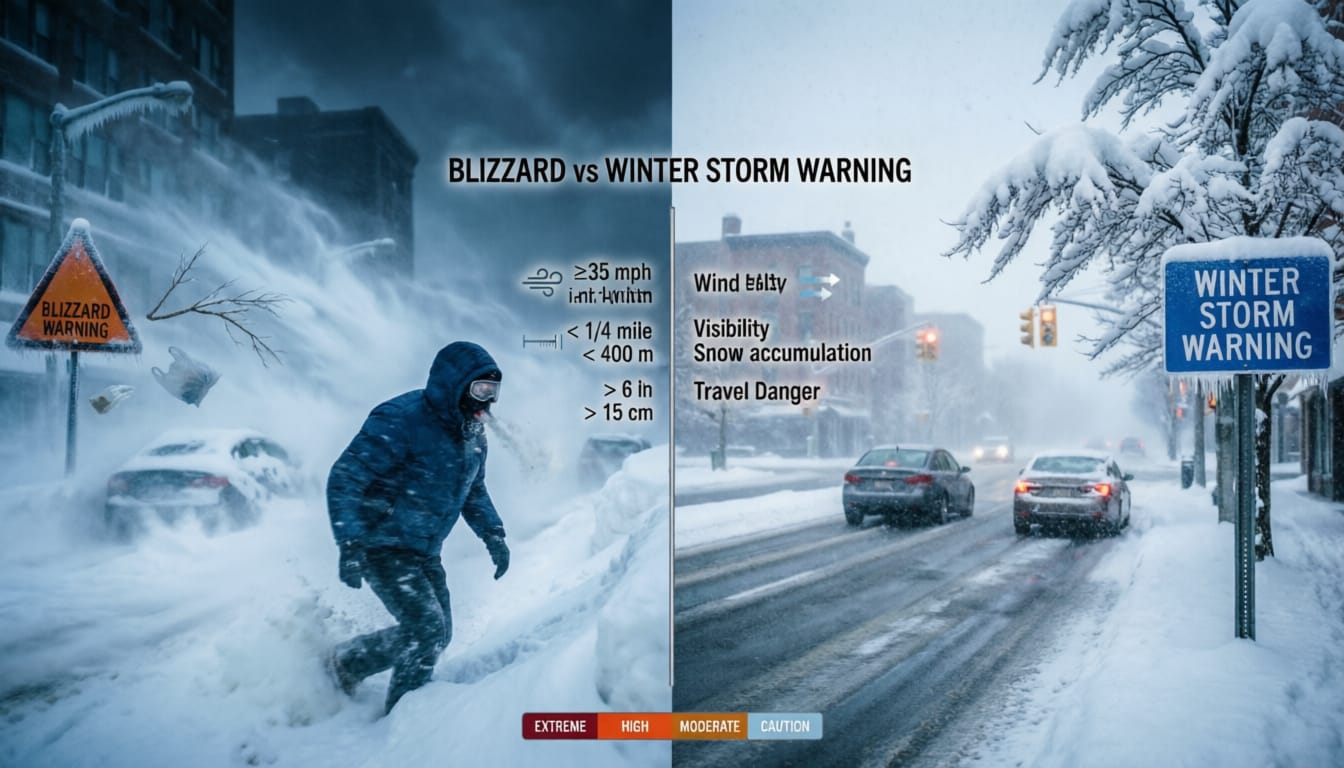
blizzard warning vs winter storm warning: Key Differences
When winter weather turns dangerous, official alerts can save lives. However, many people still feel confused about the difference between blizzard warning vs winter storm warning. Both alerts signal severe winter conditions, yet they represent very different threats. If you misunderstand these warnings, you may either overreact or, worse, underestimate a life-threatening situation.
In this complete guide, you will clearly understand how blizzard warning vs winter storm warning differ, when each alert is issued, and how you should respond. We will also explore related terms such as winter weather advisory and blizzard conditions, two highly searched phrases that often create confusion during storm season.
Winter weather events affect millions of people every year across regions like the Midwest and Northeast in the United States. Agencies such as the issue alerts to protect communities. If you follow weather updates on platforms like ManyViral, you may notice that meteorologists use precise terminology for a reason. Each warning carries specific criteria and urgency levels. Understanding those differences helps you make safer decisions for your home, travel, and family.
Let’s break down the real meaning behind blizzard warning vs winter storm warning and remove all confusion once and for all.
What Is a Blizzard Warning?
A blizzard warning signals extreme winter weather with dangerously low visibility and powerful winds. The issues this warning when sustained winds or frequent gusts reach at least 35 mph and visibility drops to a quarter mile or less for at least three consecutive hours.
Notice something important. A blizzard does not require heavy snowfall. Wind plays the dominant role. Even previously fallen snow can blow around and create whiteout conditions. That detail often surprises people when comparing blizzard warning vs winter storm warning.
When a blizzard warning is active, you face severe travel hazards. Roads disappear under blowing snow. Drivers lose all visibility within seconds. Emergency responders struggle to reach stranded vehicles. Power lines can .
What Is a Winter Storm Warning?
A winter storm warning indicates significant winter weather that creates dangerous conditions, but it does not necessarily involve blizzard-level winds or whiteout visibility. Meteorologists issue this alert when heavy snow, sleet, freezing rain, or a combination of these events threatens safety.
Unlike a blizzard warning, this alert focuses more on precipitation accumulation. Heavy snowfall of six inches or more within twelve hours often triggers the warning, although criteria vary by region. Ice accumulation can also prompt a winter storm warning because freezing rain can snap tree branches and power lines.
The key difference in the discussion of blizzard warning vs winter storm warning lies in wind intensity and visibility. A winter storm warning may bring large snow totals, yet winds may remain below blizzard criteria.
Imagine you wake up to eight inches of snow overnight. Roads become slick and dangerous. Schools close. However, you can still see clearly across the street. That situation qualifies as a winter storm warning, not a blizzard warning.
During major winter systems, weather platforms such as ManyViral explain these distinctions carefully so readers understand the true level of threat. When evaluating blizzard warning vs winter storm warning, remember that snowfall amount alone does not define a blizzard.
Core Differences Between Blizzard Warning vs Winter Storm Warning
Understanding blizzard warning vs winter storm warning requires examining three core factors: wind speed, visibility, and snowfall impact.
A blizzard warning demands strong winds of at least 35 mph and severely reduced visibility for three hours or more. Snowfall may be heavy or light, but blowing snow creates the primary danger.
A winter storm warning centers on substantial snow, ice, or sleet accumulation that disrupts normal life. Visibility may decrease during heavy snowfall, yet it does not meet sustained whiteout criteria.
When comparing blizzard warning vs winter storm warning, always ask yourself these questions. Are winds extremely strong? Is visibility near zero for hours? If yes, you face blizzard conditions. If snow and ice create hazardous travel without extreme wind, you likely face a winter storm warning.
This difference matters because emergency responses differ. Authorities may discourage all travel during a blizzard warning. During a winter storm warning, travel may remain possible with caution.
Why the Difference Matters for Safety
Many people underestimate how dangerous blizzards can become. When you confuse blizzard warning vs winter storm warning, you may take unnecessary risks.
In a winter storm warning, you might drive slowly and safely if conditions allow. In a blizzard warning, driving can become deadly within minutes. Whiteout conditions disorient drivers and lead to multi-vehicle accidents.
Strong winds during a blizzard also increase frostbite risk. Wind chill can drop temperatures to dangerous levels quickly. A person stranded outdoors without proper clothing can suffer severe consequences.
Communities rely on accurate interpretation of blizzard warning vs winter storm warning to make school closure decisions, adjust flight schedules, and prepare emergency shelters.
Real-Life Scenario Comparison
Consider two different winter days in a northern state.
On the first day, forecasters issue a winter storm warning predicting eight inches of snow. Snow falls steadily. Roads turn slippery. Schools close. However, winds remain calm. Drivers move cautiously. Visibility stays manageable.
On the second day, forecasters issue a blizzard warning. Snow falls moderately, yet winds gust at 40 mph. Visibility drops to near zero for hours. Police close highways. Emergency crews rescue stranded motorists. That scenario demonstrates the real difference in blizzard warning vs winter storm warning.
These examples show why terminology matters. The public must respond differently depending on the warning type.
How Meteorologists Decide Which Warning to Issue
Meteorologists analyze atmospheric pressure systems, wind patterns, moisture levels, and temperature profiles. They use radar data and computer forecast models to determine storm intensity.
When evaluating blizzard warning vs winter storm warning, they measure expected wind speed, duration, and visibility reduction. If wind projections meet official thresholds, they issue a blizzard warning. If snowfall or ice accumulation dominates the threat, they issue a winter storm warning.
The follows strict criteria to maintain consistency across regions. This standardized approach builds trust and ensures clear communication nationwide.
Travel, Power, and Infrastructure Impacts
Travel disruption remains one of the biggest concerns in both warnings. However, the type of disruption differs.
In blizzard warning vs winter storm warning, blizzards primarily cause sudden whiteouts and drifting snow that block roads quickly. Winter storms create gradual accumulation that plows can manage more effectively.
Ice accumulation during a winter storm warning can cause widespread power outages. Freezing rain coats power lines with heavy ice. Meanwhile, blizzards may cause outages due to wind damage.
Air travel also suffers differently. Airports may suspend operations entirely during blizzards because pilots cannot maintain visibility. During winter storms, delays occur mainly due to snow removal operations.
Preparing for Either Warning
Preparation strategies vary slightly when considering blizzard warning vs winter storm warning, yet both require planning.
For a winter storm warning, you should stock food, water, flashlights, and warm clothing. You should clear gutters and prepare snow removal tools.
For a blizzard warning, you must take extra precautions. You should avoid all travel. You should keep emergency kits in vehicles. You should ensure heating systems function properly. If authorities advise staying home, you should follow that guidance strictly.
Reliable platforms like ManyViral often share preparedness reminders before major systems arrive. Staying informed makes a measurable difference in safety outcomes.
Frequently Asked Questions About Blizzard Warning vs Winter Storm Warning
People often ask whether a blizzard is worse than a winter storm. The answer depends on the context. In terms of travel danger, blizzards usually pose a greater immediate threat because of zero visibility and strong winds. However, severe ice storms under a winter storm warning can cause long-term power outages and infrastructure damage.
Another common question asks whether heavy snow automatically means a blizzard. The answer is no. Heavy snow alone does not meet blizzard criteria without sustained strong winds and low visibility.
Many people also ask how long a blizzard must last. Official criteria require reduced visibility and strong winds for at least three consecutive hours.
When readers search ManyViral during winter outbreaks, they often seek clarity on blizzard warning vs winter storm warning because making the right decision quickly matters.
Final Thoughts on Blizzard Warning vs Winter Storm Warning
Understanding blizzard warning vs winter storm warning empowers you to respond correctly during severe winter weather. A blizzard warning signals extreme wind and dangerously low visibility. A winter storm warning highlights heavy snow or ice that disrupts travel and daily life.
Both alerts demand attention. Both can threaten safety. However, each carries different primary hazards. By recognizing the difference, you protect yourself, your family, and your community.
Weather awareness saves lives. Stay informed. Monitor official updates. And always respect the power of winter.
Just a call or click away – Let’s Connect
0319 980 2237
FAQs
The main difference in blizzard warning vs winter storm warning lies in wind and visibility. A blizzard warning requires sustained winds of 35 mph or higher and visibility reduced to a quarter mile or less for at least three hours. A winter storm warning focuses on heavy snow, sleet, or ice accumulation without necessarily meeting blizzard wind criteria.
A blizzard often creates more immediate travel danger due to whiteout conditions and strong winds. However, severe ice storms under a winter storm warning can cause widespread power outages and long-term disruptions.
You may drive cautiously during a winter storm warning if conditions allow. However, officials strongly discourage travel during a blizzard warning because visibility can drop to near zero.
No. Heavy snow alone does not qualify as a blizzard. Strong winds and reduced visibility must meet official criteria for a blizzard warning.
The issues these warnings in the United States based on specific meteorological thresholds.
Leave a Reply