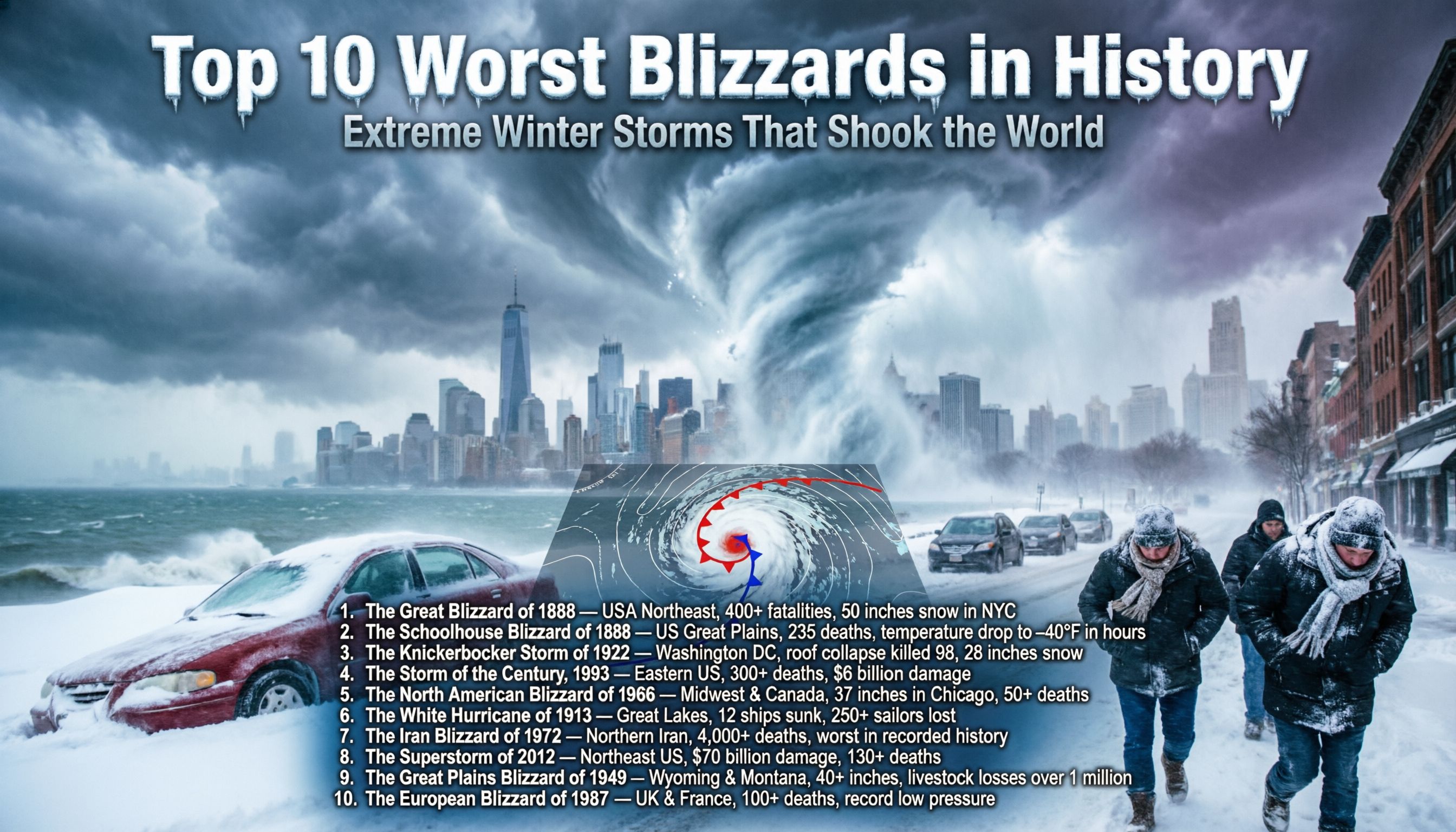
Worst Blizzards in History That Shocked World
The worst blizzards in history have shaped nations, rewritten weather records, and changed how governments prepare for winter disasters. These extreme snowstorms buried cities, paralyzed transportation systems, and claimed thousands of lives. When we examine the worst blizzards in history, we do more than revisit dramatic weather events. We study powerful lessons about survival, climate patterns, and human resilience.
Search interest around biggest snowstorms ever recorded and deadliest winter storms continues to rise every winter. Readers want accurate, experience-based information that explains what truly happened and how similar disasters might unfold again. At ManyViral, weather-related topics consistently draw strong engagement because people want reliable insights during extreme seasons. This guide dives deep into the worst blizzards in history, exploring their impact, causes, and long-term consequences.
What Makes a Blizzard Historically Devastating?
Meteorologists define a blizzard as a severe snowstorm with sustained winds of at least 35 mph and visibility reduced to a quarter mile or less for three hours or more. However, the worst blizzards in history exceed basic criteria. They combine intense snowfall, hurricane-force winds, deadly wind chills, and prolonged duration.
Several factors determine how destructive a storm becomes. Population density plays a major role. A blizzard that hits a rural region may cause limited damage compared to one that strikes a major metropolitan city. Infrastructure strength, emergency preparedness, and communication systems also influence outcomes. When power grids fail and transportation shuts down, even modern cities struggle.
Historical blizzards often became catastrophic because forecasting technology was limited. Communities received little to no warning. Today, satellite systems and advanced modeling reduce uncertainty, yet extreme winter storms still overwhelm unprepared regions.
The Great Blizzard of 1888 – United States
The Great Blizzard of 1888 stands among the worst blizzards in history in North America. This storm slammed the northeastern United States in March 1888. It dumped up to 50 inches of snow in parts of and surrounding states. Winds reached 45 miles per hour, creating massive snowdrifts that buried homes and trains.
More than 400 people lost their lives. Telegraph lines collapsed, isolating entire cities. Public transportation completely shut down. Manyviral This disaster pushed cities to move power and communication lines underground. It also led to the expansion of underground subway systems.
If a similar storm struck today, modern forecasting would reduce fatalities. However, the economic cost would likely reach billions of dollars.
The Schoolhouse Blizzard of 1888 – Midwest, USA
Only months before the Great Blizzard, another deadly storm devastated the American Midwest. Known as the Schoolhouse Blizzard, this sudden storm ranks among the worst blizzards in history because it struck without warning.
Temperatures dropped rapidly across the Dakota Territory and Nebraska. Many children were still in school when the blizzard began. Teachers attempted to send them home, but whiteout conditions trapped them outside. Around 235 people died, many of them children.
This tragedy changed how schools respond to severe weather. Today, early dismissal protocols and weather alerts help prevent similar disasters.
The Knickerbocker Storm of 1922 – Washington, D.C.
The Knickerbocker Storm devastated in January 1922. Heavy snowfall accumulated quickly, reaching nearly 28 inches. The roof of the Knickerbocker Theatre collapsed under the weight of snow, killing 98 people.
This event ranks among the worst blizzards in history due to structural failures and urban vulnerability. The tragedy forced stricter building codes across the United States. Engineers began designing roofs to withstand heavy snow loads.
The Iran Blizzard of 1972 – The Deadliest on Record
The Iran Blizzard of 1972 remains the deadliest winter storm ever recorded. It killed approximately 4,000 people. Entire villages disappeared beneath snowdrifts reaching up to 26 feet.
This storm clearly ranks among the worst blizzards in history because of its unprecedented death toll. Remote mountainous regions received no immediate aid. Rescue teams struggled to reach buried communities.
The scale of destruction shocked the world. Governments began rethinking disaster management strategies in mountainous regions. ManyViral previously explored how isolated terrain increases winter storm fatalities, and this event illustrates that danger perfectly.
The Blizzard of 1993 – The Storm of the Century
Meteorologists often call the Blizzard of 1993 the Storm of the Century. This massive system affected the eastern United States and parts of Cuba. It brought hurricane-force winds, tornadoes, and record-breaking snowfall.
The storm caused over 300 deaths and billions in damages. It impacted states from Florida to Maine. Because of its wide reach and intensity, experts place it among the worst blizzards in history.
Unlike earlier storms, this blizzard benefited from advanced forecasting. Authorities issued warnings days in advance. Many people prepared, reducing casualties compared to past disasters.
The Chicago Blizzard of 1967
In January 1967, Chicago experienced 23 inches of snow within 24 hours. Winds created enormous drifts that stranded vehicles across highways. The storm paralyzed the city.
Chicago residents still remember this as one of the worst blizzards in history for the region. It forced local governments to improve snow removal systems and emergency coordination.
The White Hurricane of 1913 – Great Lakes
The White Hurricane of 1913 struck the Great Lakes with blizzard conditions and hurricane-force winds. It sank multiple ships and killed more than 250 people.
Maritime historians classify this as one of the worst blizzards in history due to its impact on shipping routes. The disaster led to improved marine weather forecasting and stricter shipping regulations.
The Buffalo Blizzard of 1977
Lake-effect snow fueled the Buffalo Blizzard of 1977. Snow and wind combined to create ground blizzard conditions. Drifts reached two stories high.
Buffalo residents describe it as one of the worst blizzards in history for western New York. The storm lasted days, and economic activity halted completely.
The 2016 United States Blizzard – Winter Storm Jonas
Winter Storm Jonas delivered record snowfall across the Mid-Atlantic. Some areas measured more than 40 inches. Millions stayed indoors as states declared emergencies.
This storm belongs in discussions of the worst blizzards in history because of its widespread impact on transportation and commerce. However, improved emergency planning prevented catastrophic loss of life.
How the Worst Blizzards Changed Modern Preparedness
The worst blizzards in history forced governments to strengthen forecasting systems, building standards, and emergency communication networks. Cities invested in underground infrastructure. Schools implemented severe weather protocols. Airlines upgraded de-icing technologies.
Real-life scenarios demonstrate why preparation matters. Imagine a hospital losing power during a blizzard. Backup generators and fuel reserves now prevent life-threatening failures. Consider families stranded in vehicles during whiteout conditions. Public awareness campaigns now emphasize winter survival kits.
At, readers often ask how past disasters influence today’s safety measures. The answer remains clear. Each catastrophic storm pushed society to adapt.
Could Climate Change Increase Future Blizzards?
Climate change does not eliminate blizzards. Warmer air holds more moisture. When temperatures drop below freezing, that moisture can produce heavy snowfall. Some scientists predict fewer but more intense winter storms in certain regions.
The worst blizzards in history show that rare events still occur even in changing climates. Urban expansion also increases vulnerability. More infrastructure means more potential damage.
Lessons from the Worst Blizzards in History
Communities survive severe winter storms when they prioritize preparation, communication, and infrastructure resilience. The worst blizzards in history reveal the consequences of ignoring early warning signs. They also highlight human courage and cooperation.
From buried villages in Iran to frozen harbors in the Great Lakes, these storms reshaped policies and public awareness. They remind us that nature demands respect. Advanced forecasting reduces risk, but personal readiness still matters.
As winter approaches each year, stories of the worst blizzards in history resurface across media platforms, including discussions on ManyViral. These events continue to educate new generations about extreme weather safety.
Extreme winter storms will strike again. The question is not if, but when. Understanding history gives us the power to respond smarter and faster.
Just a call or click away – Let’s Connect
0319 980 2237
FAQs
The Iran Blizzard of 1972 ranks as the deadliest blizzard ever recorded, killing approximately 4,000 people and burying entire villages under massive snowdrifts.
The Blizzard of 1993 and the Great Blizzard of 1888 often rank among the largest snowstorms in U.S. history due to snowfall totals and geographic reach.
Modern forecasting significantly reduces fatalities, but it cannot prevent storms. Preparedness, infrastructure strength, and public awareness determine outcomes.
Blizzards become deadly when strong winds combine with heavy snowfall and freezing temperatures, reducing visibility and causing hypothermia, infrastructure collapse, and transportation shutdowns.
Iran experienced the deadliest blizzard in 1972, making it one of the most catastrophic winter weather events ever recorded.
Leave a Reply