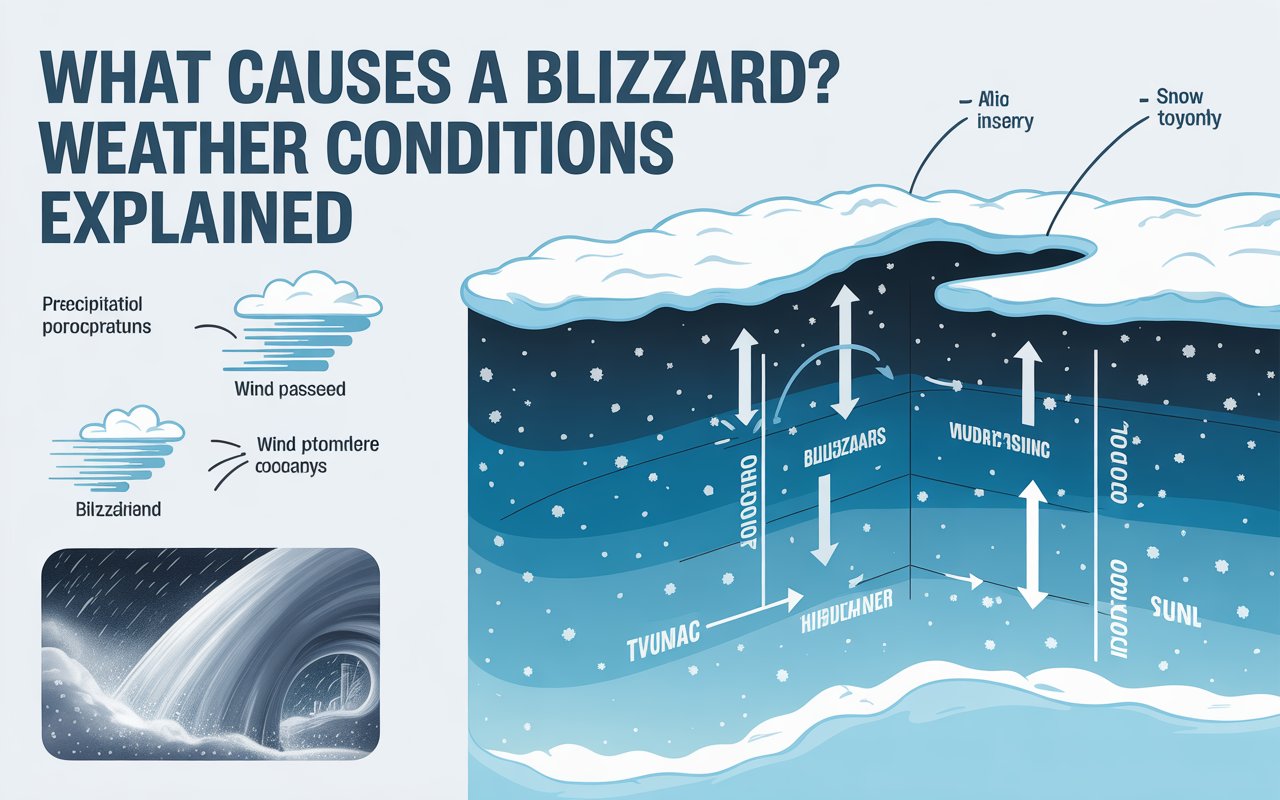
What Causes a Blizzard? Weather Conditions Explained
Winter storms often capture attention, but many people still ask, what causes a blizzard and why some snowstorms turn into life-threatening events. A blizzard does not simply mean heavy snowfall. It forms under very specific atmospheric conditions that combine strong winds, freezing temperatures, and reduced visibility for extended periods. Manyviral When meteorologists analyze blizzard conditions and track winter storm formation, they look at precise weather patterns that transform ordinary snowfall into a powerful, disruptive storm.
Understanding what causes a blizzard helps individuals prepare better, travel safely, and interpret weather warnings correctly. Weather experts, emergency planners, and media platforms like ManyViral frequently explain how these storms develop so communities can respond early. In this detailed guide, we will explore the science, real-life examples, and atmospheric mechanics behind these extreme winter events.
Understanding the Official Definition of a Blizzard
Before explaining what causes a blizzard, we must clarify what qualifies as one. A blizzard is not defined by snowfall amount alone. Manyviral Meteorological agencies classify a blizzard based on sustained winds or frequent gusts of at least 35 miles per hour, visibility reduced to less than a quarter mile, and conditions lasting for at least three hours.
These storms may occur even without heavy snowfall. In some cases, strong winds pick up existing snow from the ground and create whiteout conditions. Therefore, when people ask what causes a blizzard, they must consider wind, temperature, and snow interaction rather than snowfall depth alone.
Blizzards create dangerous travel conditions, frostbite risks, and power outages. They disrupt cities, shut down airports, and halt transportation systems. Understanding their formation provides practical safety insight.
The Core Atmospheric Ingredients Behind a Blizzard
When meteorologists analyze what causes a blizzard, they identify three primary atmospheric ingredients. First, a strong low-pressure system must develop. Second, there must be a significant temperature contrast between air masses. Third, powerful winds must intensify across the region.
Low-pressure systems act as engines for winter storms. As warm, moist air rises into colder upper layers, it cools and condenses into snow. Meanwhile, colder air pushes downward and strengthens wind circulation. This process intensifies the storm system.
Temperature contrast plays a crucial role. Cold Arctic air collides with warmer, moist air from oceans or southern regions. This collision forms a strong pressure gradient. That pressure difference generates high winds, which directly contribute to blizzard conditions.
Therefore, when people wonder what causes a blizzard, the answer lies in the interaction between low pressure, moisture, cold air, and wind speed.
The Role of Arctic Air Masses
Cold air forms the backbone of every blizzard. Arctic air masses originate in polar regions and move southward during winter. When this extremely cold air spreads across populated regions, it creates freezing surface temperatures.
If moist air meets this Arctic blast, precipitation falls as snow instead of rain. When strong winds accompany this event, blizzard conditions develop rapidly. This interaction explains much of what causes a blizzard across North America and parts of Europe.
For example, during major winter events in the northeastern United States, cold air from Canada often clashes with moisture from the Atlantic Ocean. That clash intensifies snowfall and wind speeds.
Cold air alone does not create a blizzard. However, without sustained freezing temperatures, snow would melt or fall as rain. Thus, Arctic air remains essential in explaining what causes a blizzard.
Jet Streams and Storm Intensification
The jet stream strongly influences winter weather. It acts like a fast-moving river of air high in the atmosphere. When the jet stream dips southward, it pulls cold air along with it. At the same time, it helps strengthen developing low-pressure systems.
Meteorologists often examine jet stream patterns to predict what causes a blizzard in specific regions. When the jet stream creates a deep trough, it enhances upward motion in the atmosphere. That upward motion strengthens storms and increases snowfall rates.
Strong jet stream dynamics also amplify wind speeds at the surface. These winds reduce visibility and create blowing snow, which transforms a winter storm into a blizzard.
Weather analysts on platforms like ManyViral often highlight jet stream shifts when explaining large-scale winter events to broader audiences.
Moisture Sources: Oceans and Large Water Bodies
Moisture fuels snowfall. Without adequate atmospheric moisture, snow totals remain limited. Therefore, when asking what causes a blizzard, we must consider moisture sources.
Coastal regions experience powerful blizzards because ocean water provides continuous moisture supply. Nor’easters in the northeastern United States form when Atlantic moisture feeds into cold continental air. The result often includes intense snowfall combined with strong coastal winds.
Similarly, lake-effect snow events occur near large lakes. Cold air passes over relatively warmer water, absorbs moisture, and then deposits heavy snow downwind. If wind speeds increase sufficiently, these events may meet blizzard criteria.
This moisture dynamic plays a central role in understanding what causes a blizzard, especially in coastal and Great Lakes regions.
Pressure Gradients and Wind Speeds
Wind separates a heavy snowstorm from a true blizzard. Pressure gradients develop when atmospheric pressure changes significantly over a short distance. The stronger the gradient, the faster the wind flows.
When discussing what causes a blizzard, wind speed remains critical. Sustained winds above 35 miles per hour create drifting snow and whiteout conditions. Even moderate snowfall can become dangerous when wind intensifies.
Strong winds also cause ground blizzards. In these cases, falling snow may be minimal. However, wind lifts loose snow and reduces visibility drastically.
Real-life examples demonstrate how quickly conditions deteriorate. Drivers may begin a trip under light snowfall and suddenly encounter zero visibility within minutes due to wind-driven snow.
The Difference Between a Snowstorm and a Blizzard
Many people confuse heavy snowfall with blizzard conditions. However, snowfall amount does not define a blizzard. When explaining what causes a blizzard, experts emphasize wind and visibility thresholds rather than snow totals alone.
A snowstorm may deposit several inches of snow but lack strong winds. In contrast, a blizzard might produce moderate snowfall yet create dangerous whiteout conditions due to high wind speeds.
Understanding this distinction improves weather literacy and safety awareness.
Real-Life Example: Major Urban Blizzard
Consider a major city experiencing a strong winter low-pressure system. Arctic air settles over the region. Moisture from a nearby ocean feeds into the system. The pressure gradient tightens rapidly. Winds increase beyond 40 miles per hour. Snow falls steadily for six hours.
In this scenario, all elements align. The city experiences reduced visibility, closed highways, airport shutdowns, and power outages. Emergency services respond to stranded drivers. Schools cancel classes. News outlets and digital media platforms like ManyViral publish storm updates and safety advice.
This real-world example clearly illustrates what causes a blizzard in practical terms.
Climate Change and Blizzard Frequency
Climate change influences winter weather patterns in complex ways. Warmer global temperatures increase atmospheric moisture capacity. This can intensify snowfall when cold air remains present.
When examining what causes a blizzard in a changing climate, scientists analyze shifting jet streams, Arctic warming, and ocean temperature changes. Some regions may experience fewer storms overall but stronger individual events.
While climate change does not directly create blizzards, it modifies the atmospheric ingredients that determine storm intensity.
Blizzard Warnings and Forecasting
Meteorologists use advanced models, satellite imagery, radar data, and atmospheric soundings to predict blizzard conditions. Forecasting teams evaluate wind projections, snowfall rates, and pressure gradients carefully.
When conditions meet official thresholds, authorities issue blizzard warnings. These warnings alert residents to avoid travel and prepare emergency supplies.
Understanding what causes a blizzard empowers people to interpret warnings correctly and respond responsibly.
Safety Implications of Blizzard Conditions
Blizzards present serious health and safety risks. Strong winds increase frostbite danger by lowering wind chill temperatures. Whiteout conditions cause traffic accidents. Power outages may leave homes without heating.
Emergency preparedness depends on recognizing what causes a blizzard before it strikes. Residents in high-risk areas often stock emergency kits, secure outdoor items, and monitor weather alerts closely.
Communities that understand storm formation typically respond faster and reduce injury rates.
The Science Behind Whiteout Conditions
Whiteout occurs when wind-driven snow eliminates visual contrast. The sky, ground, and horizon blend into one continuous white field. Drivers lose depth perception and direction.
Whiteout conditions represent one of the most dangerous aspects of what causes a blizzard. Even experienced drivers struggle to navigate safely. Manyviral Aviation operations also halt during severe visibility reduction.
Meteorologists measure visibility carefully when determining whether conditions qualify as a blizzard.
How Geography Influences Blizzard Formation
Geographic location plays a powerful role in what causes a blizzard. Coastal areas, plains, and regions near large lakes experience higher risk due to open terrain and moisture access.
Flat landscapes allow wind to travel freely without obstruction. Manyviral Mountain regions may experience heavy snowfall but lower sustained wind speeds in certain valleys.
Understanding regional geography helps explain why some areas face frequent blizzards while others rarely experience them.
Why Duration Matters in Blizzard Classification
Duration distinguishes temporary snow squalls from full blizzards. Official criteria require conditions to persist for at least three hours. This sustained impact increases danger significantly.
When analyzing what causes a blizzard, meteorologists monitor how long wind and low visibility continue. Brief gusts do not qualify. Prolonged hazardous conditions define the event.
Duration amplifies impact on infrastructure, transportation, and emergency response systems.
Psychological and Economic Impact
Blizzards affect more than weather patterns. They influence economic productivity, mental health, and supply chains. Businesses close. Flights cancel. Delivery systems halt.
Understanding what causes a blizzard also means recognizing its broader societal effects. Prepared communities reduce disruption by planning ahead.
Conclusion: The Complete Picture
In simple terms, what causes a blizzard involves the combination of strong low-pressure systems, Arctic air, significant moisture supply, and sustained high winds that reduce visibility for at least three hours. Snowfall alone does not define the storm. Wind intensity and atmospheric dynamics determine whether a winter system reaches blizzard status.
By understanding these meteorological principles, individuals improve safety awareness and weather literacy. Blizzards may appear sudden, but atmospheric science reveals predictable patterns behind their formation.
Just a call or click away – Let’s Connect
0319 980 2237
FAQs
What causes a blizzard involves a strong low-pressure system, cold Arctic air, significant moisture, and sustained winds over 35 mph that reduce visibility below a quarter mile for at least three hours.
A snowstorm focuses on snowfall amount. A blizzard requires strong winds and low visibility, regardless of how much snow falls.
Yes. Strong winds can lift existing snow from the ground and create whiteout conditions, meeting blizzard criteria even with minimal new snowfall.
Meteorological standards require winds above 35 mph and visibility under a quarter mile for at least three consecutive hours.
Climate change may intensify certain winter storms due to increased atmospheric moisture, but frequency varies by region.
Leave a Reply